Wide-Column Databases: Built for an Avalanche of Writes

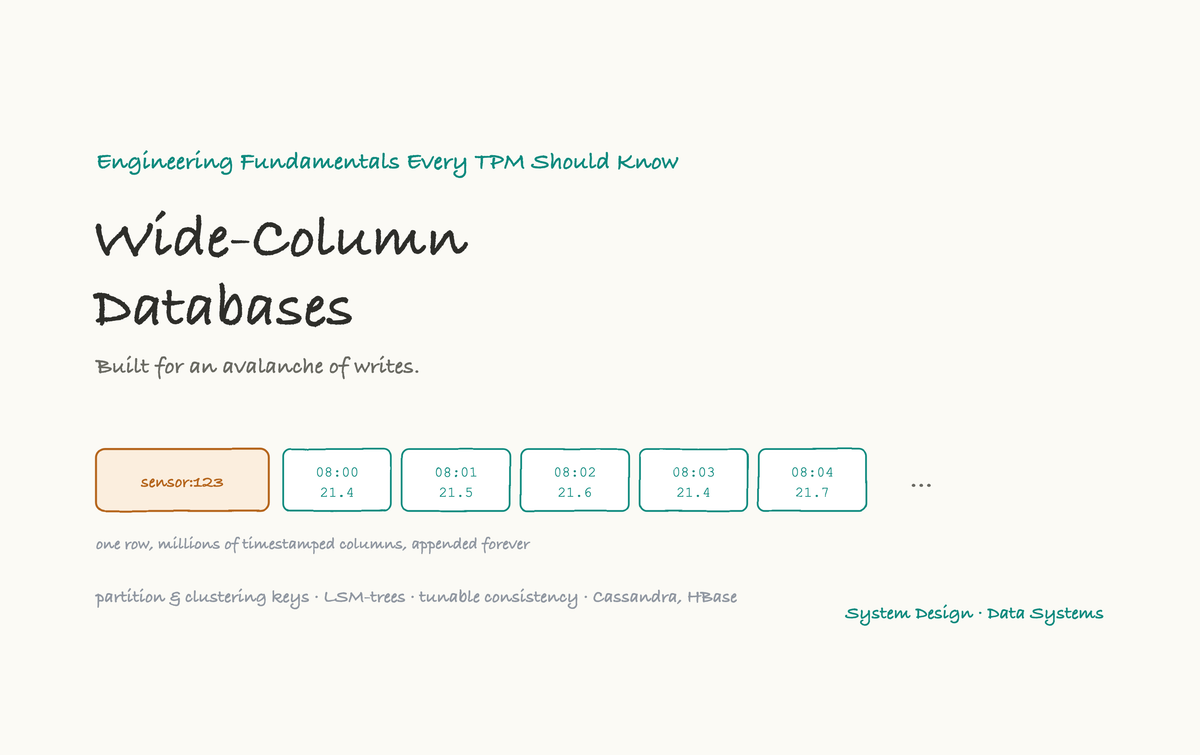
Some data does not arrive politely. It pours. Think of every tap and swipe in a mobile app, every message in a chat platform, every reading from a fleet of sensors, every location ping from a fleet of vehicles, every line of a log from thousands of servers. This is data measured not in rows per minute but in millions of writes per second, arriving forever, never stopping. A relational database, with its single write-accepting primary, simply cannot drink from that firehose.
Wide-column databases were built for exactly this. They are the NoSQL family designed from the ground up to absorb relentless, massive write volume and to spread effortlessly across hundreds of machines. This deep-dive follows the evolution overview and the document-database article, and it covers the family people often find the most foreign at first, because it asks you to think about data in an unusual way. Cassandra and HBase are the names you'll hear most. By the end you'll understand the model, the two keys that make it work, why writes are so absurdly fast, and the genuinely different way you have to design for it.
The model: rows that can grow enormously wide
The name is a little misleading, so let's set the picture straight. A wide-column database is not really about columns the way a spreadsheet is. The best mental model is a giant, sorted map of maps.
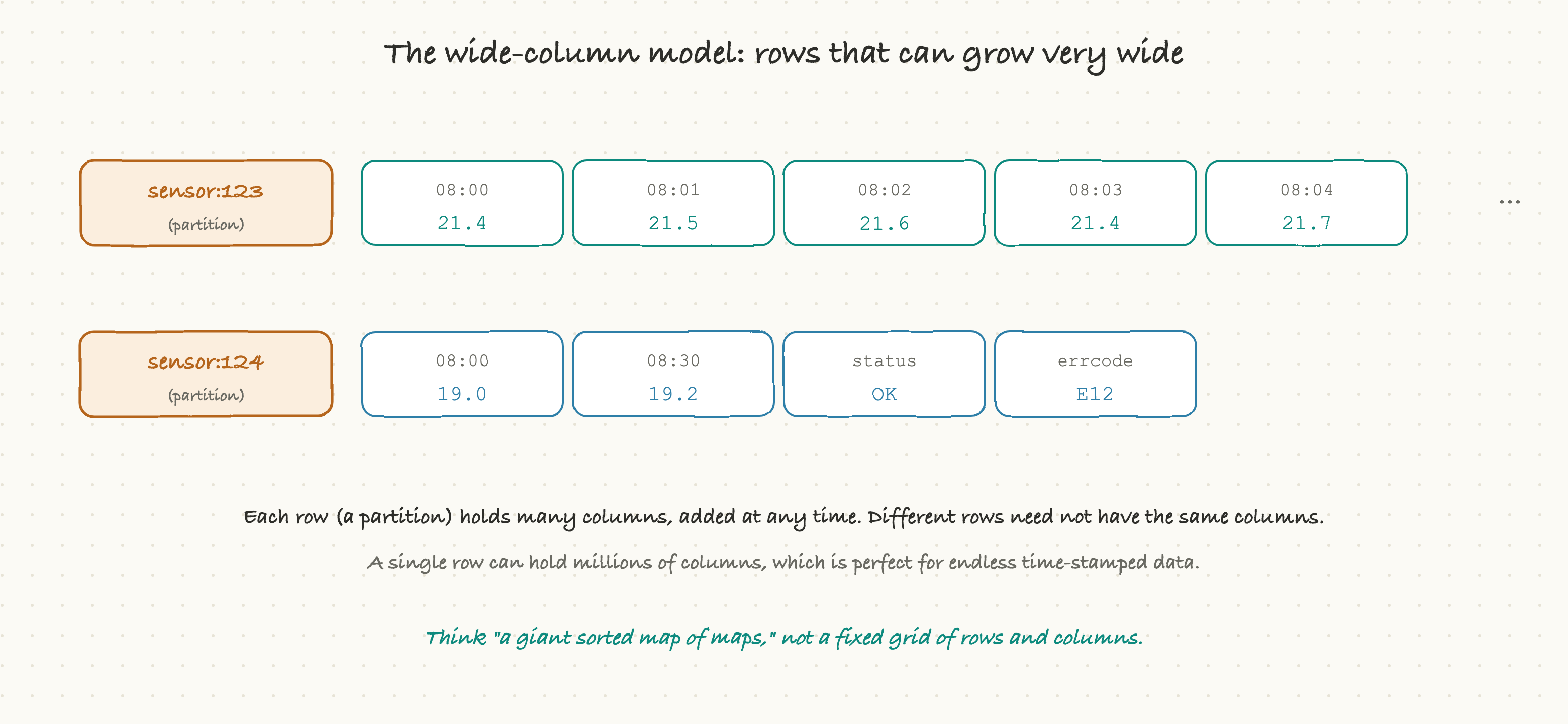
Each row is identified by a key (here, a sensor id) and holds a set of column-value pairs. The crucial difference from a relational table is that a row is not a fixed set of columns. One row can hold five columns; another row can hold five million. Columns are added on the fly, and different rows in the same table need not share the same columns at all. In the picture, one sensor's row is a long series of timestamped readings, while another sensor's row has a completely different set of columns including a status and an error code.
This is exactly the shape that endless time-stamped data wants. A sensor producing a reading every second generates a row that just keeps getting wider, one new column per reading, forever. The database is built to make that not only possible but fast. Don't picture a grid; picture a key pointing at an ever-growing, sorted collection of values.
The two keys that run everything
Here is the concept that unlocks wide-column databases, and it is worth slowing down for. The primary key has two distinct parts, and they do two completely different jobs.
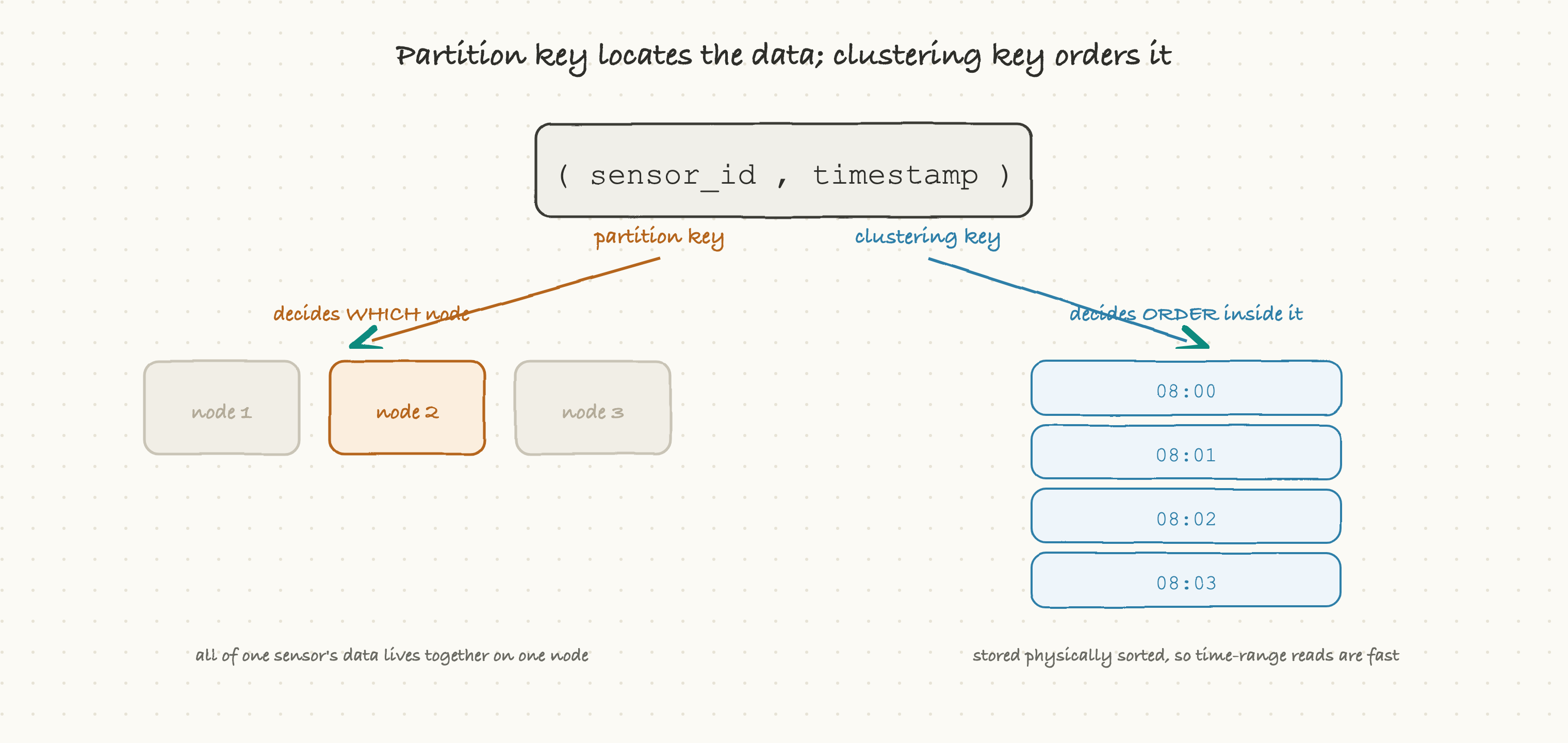
The partition key decides which machine the data lives on. The database hashes it and routes every row with that key to a specific node (and its replicas). Everything sharing a partition key lives together on the same node. This is how the database spreads data across a huge cluster: different partition keys land on different machines, balancing the load.
The clustering key decides the order of the data within that partition. Rows are physically stored sorted by the clustering key. So if your partition key is a sensor id and your clustering key is a timestamp, then all of one sensor's data lives together on one machine, physically sorted by time. Asking for "this sensor's readings between 8am and 9am" becomes a fast, contiguous read of already-sorted data, no scanning, no sorting at query time.
Get those two keys right and the database is a rocket. Get them wrong and nothing else can save you, which is why this is the single most important design decision in the whole family. The partition key gives you scale and locality; the clustering key gives you fast ordered reads.
Why the writes are so fast: the LSM-tree
Wide-column databases can absorb writes at a rate that seems almost unfair, and there's a specific, clever reason: a storage design called the log-structured merge-tree, or LSM-tree. You don't need the full theory, but the core idea is genuinely beautiful and worth seeing.
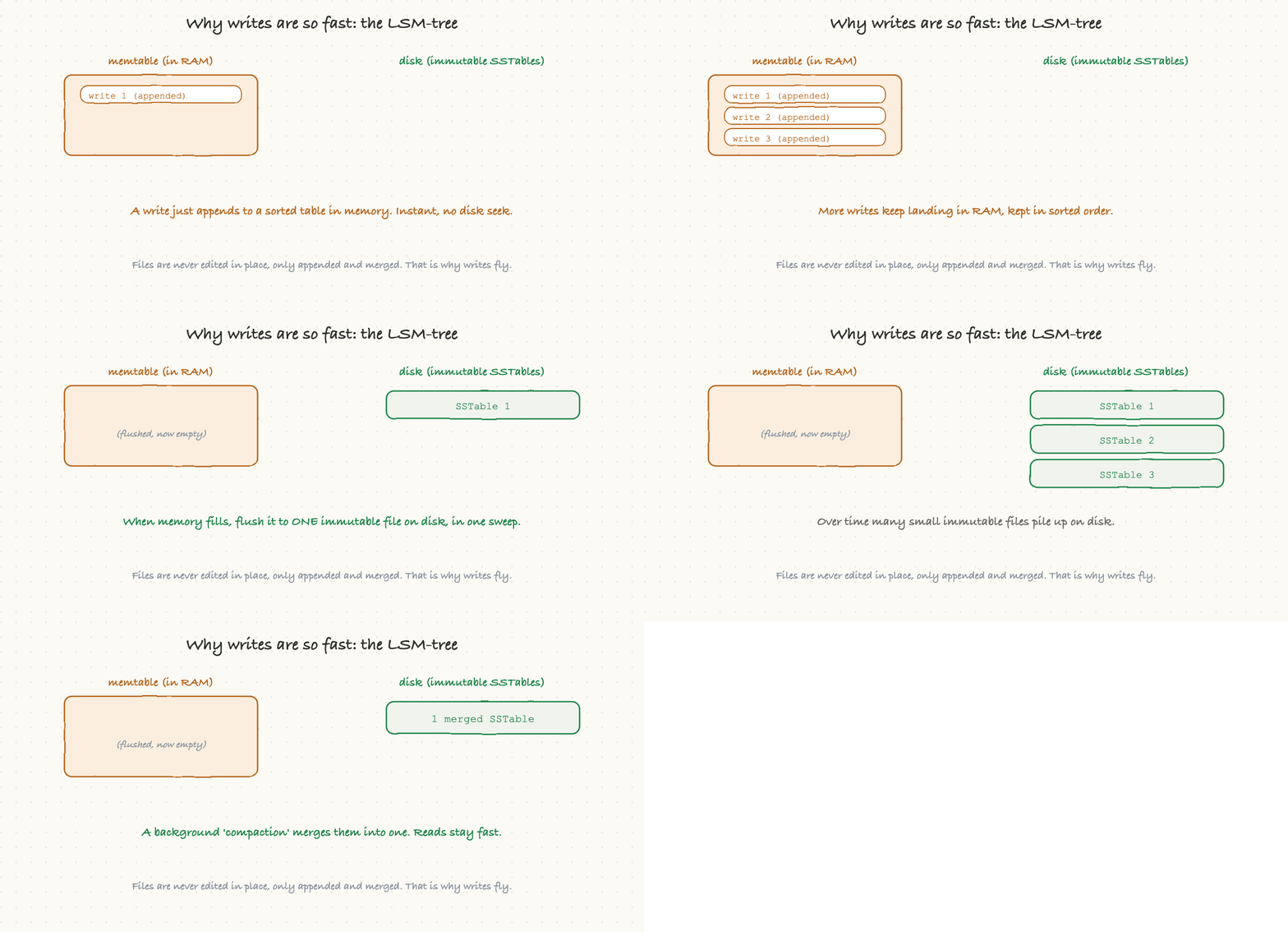
The trick is that a write is never made by hunting down the old data on disk and editing it in place. Editing in place means a slow random disk seek. Instead, a write simply gets appended to a sorted table in memory (the "memtable"). Appending to memory is about as fast as a computer can do anything. When that memory buffer fills up, the whole thing is flushed to disk in one smooth sequential sweep, as a new immutable file (an "SSTable") that is never modified again. Over time, these immutable files pile up, and a background process called compaction quietly merges them into fewer, larger files so reads stay efficient.
The payoff: writes are always fast sequential operations, never slow random ones, because the database never goes back to overwrite existing data. It only ever appends and later merges. This is the engine behind the firehose-absorbing write performance. The trade-off, which is the honest cost, is that reads can have to check several files to assemble the current value, and compaction consumes background resources. But for write-heavy workloads, that's a trade you happily make.
Distributed by design: the ring and replication
Wide-column databases assume from day one that they run on many machines, and their architecture reflects that. In a system like Cassandra, there is no special "primary" node. All nodes are equal peers arranged in a logical ring.
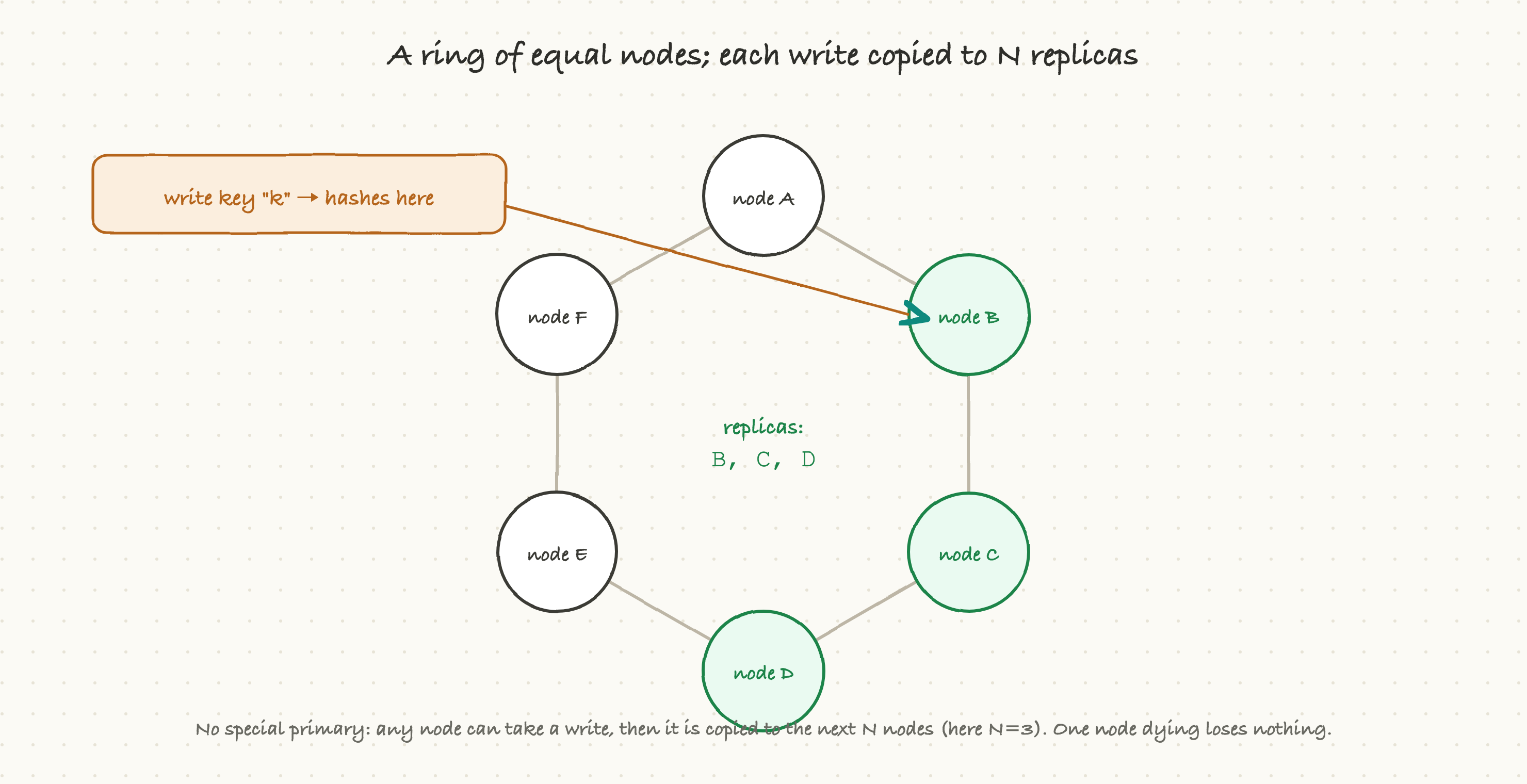
A row's partition key is hashed to a position on the ring, which determines its home node. The data is then also copied to the next few nodes around the ring, a count called the replication factor (commonly three). Because every node is an equal peer, any node can accept a write and coordinate it, and because the data is replicated several times, a node can die without losing anything or even interrupting service. This peer-to-peer, no-single-leader design is exactly why these databases stay up through hardware failures and span multiple data centers gracefully.
This also lets you do something relational databases can't: tunable consistency. Because data lives on several replicas, you get to choose, per operation, how many of them must respond before you call it done.
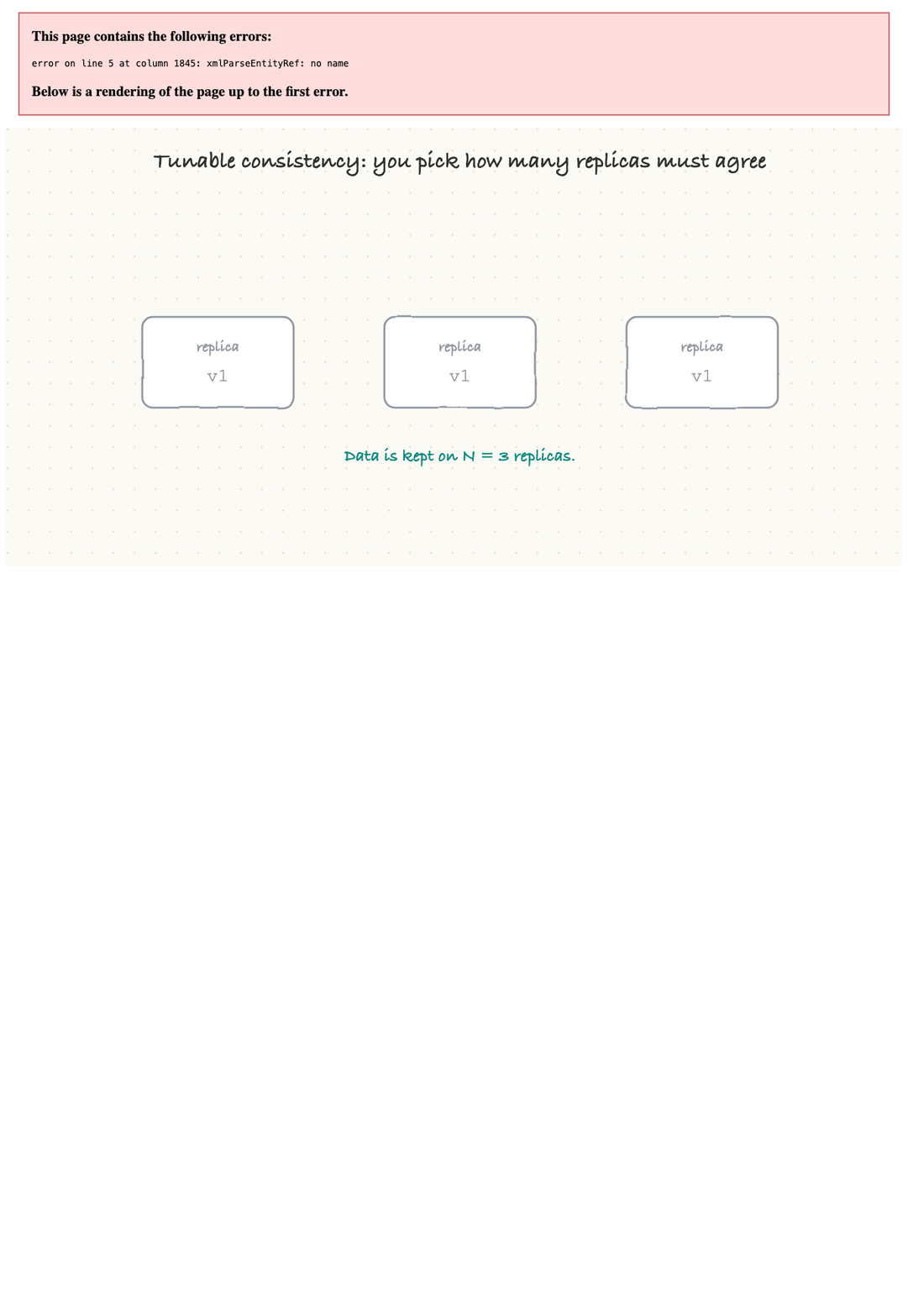
Say data is kept on three replicas (N=3). On a write, you can require, say, two of them to acknowledge before you call it successful (W=2). On a read, you can require two to respond and take the newest value (R=2). There's a simple rule hiding here: if your write count plus your read count is greater than the total replicas (W + R > N), then any read is guaranteed to see the latest write, which is strong consistency. Loosen those numbers (W=1, R=1) and you get faster operations at the risk of occasionally reading slightly stale data. The same database can be dialed anywhere from "fast and eventually consistent" to "slower and strongly consistent," per query. You hold the dial.
Same family, opposite CAP choices
This is where Cassandra and HBase, both wide-column databases, reveal that they made opposite bets, and it's the clearest real-world illustration of the CAP theorem from the evolution article.
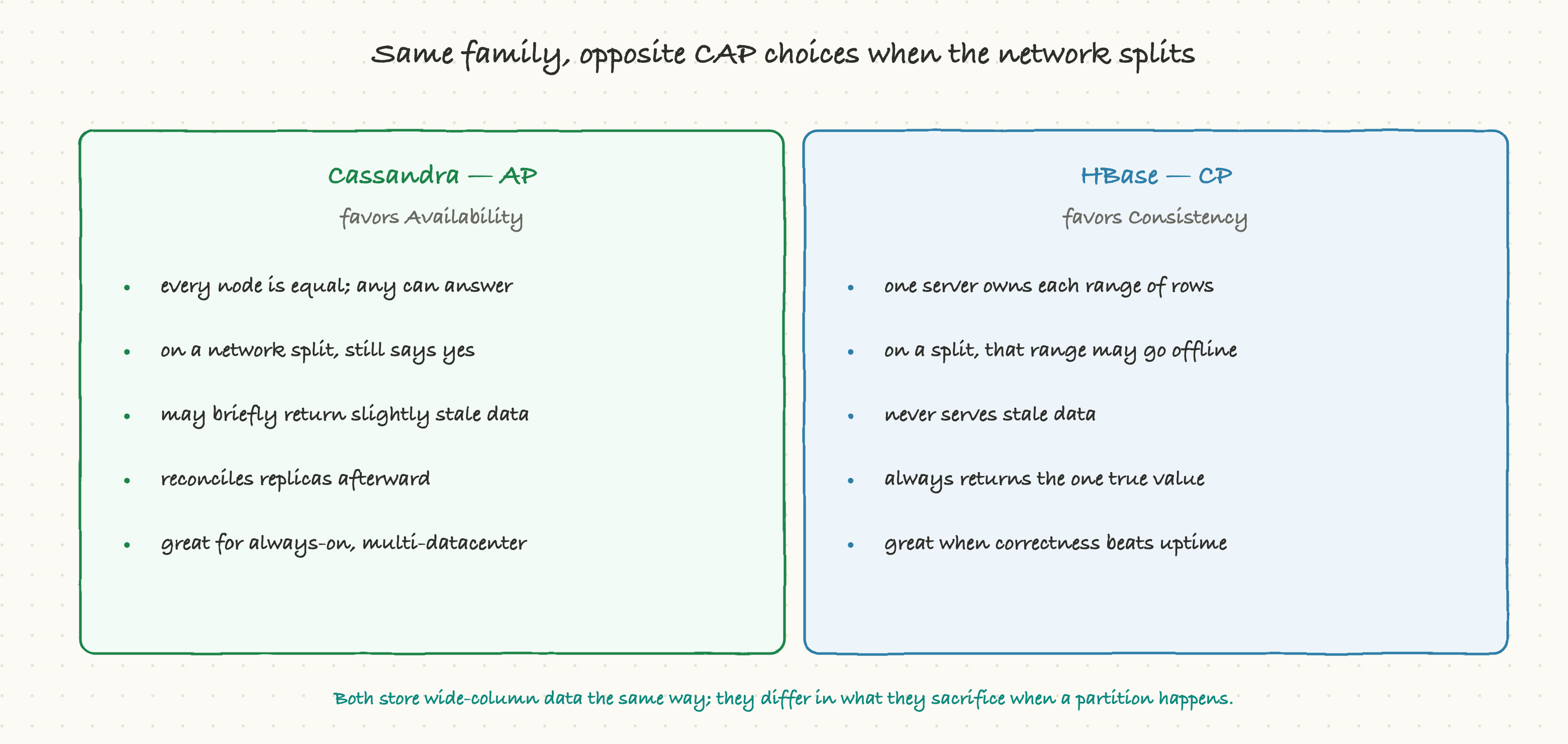
Cassandra is AP: it favors availability. Every node is equal, so when the network splits, nodes keep answering rather than going dark, accepting that they might briefly serve slightly stale data and reconcile afterward. That's the right call for an always-on, globally distributed system where being down is worse than being a second behind.
HBase is CP: it favors consistency. One server owns each range of rows, so it can guarantee you always read the one true current value, but if that server or its range is cut off by a network split, that slice of data may become temporarily unavailable rather than risk serving something stale. That's the right call when correctness matters more than uptime.
Same data model, same write performance, opposite answer to the question "what do we sacrifice when the network breaks?" Knowing which one a system chose tells you exactly how it will behave on its worst day.
You design around your queries, not your data
Here is the mental shift that trips people up most, and it's the most important practical thing to internalize. In a relational database, you model your data cleanly first, then ask any question you like later with SQL and joins. Wide-column databases flip that completely: you design your tables around the exact queries you intend to run, decided in advance.
There are no flexible ad-hoc joins here. You can efficiently fetch data by its partition key, and read ranges by clustering key, and that's largely it. So if you need to look up data three different ways, you often store it three different ways, deliberately duplicating it into three tables each optimized for one query. To a relational mind, intentionally duplicating data feels wrong. In the wide-column world it's normal and correct, because storage is cheap, writes are fast, and queries must be lightning quick and predictable.
This is the deal you're making. You give up query flexibility, and in return you get write throughput and scale that relational databases can't touch. If you don't know your query patterns yet, or you need to slice the data in unpredictable ways, this is the wrong tool, and forcing it will hurt. If you know exactly how you'll read your data and you need to write a tidal wave of it, nothing else comes close.
When it fits, and when it doesn't
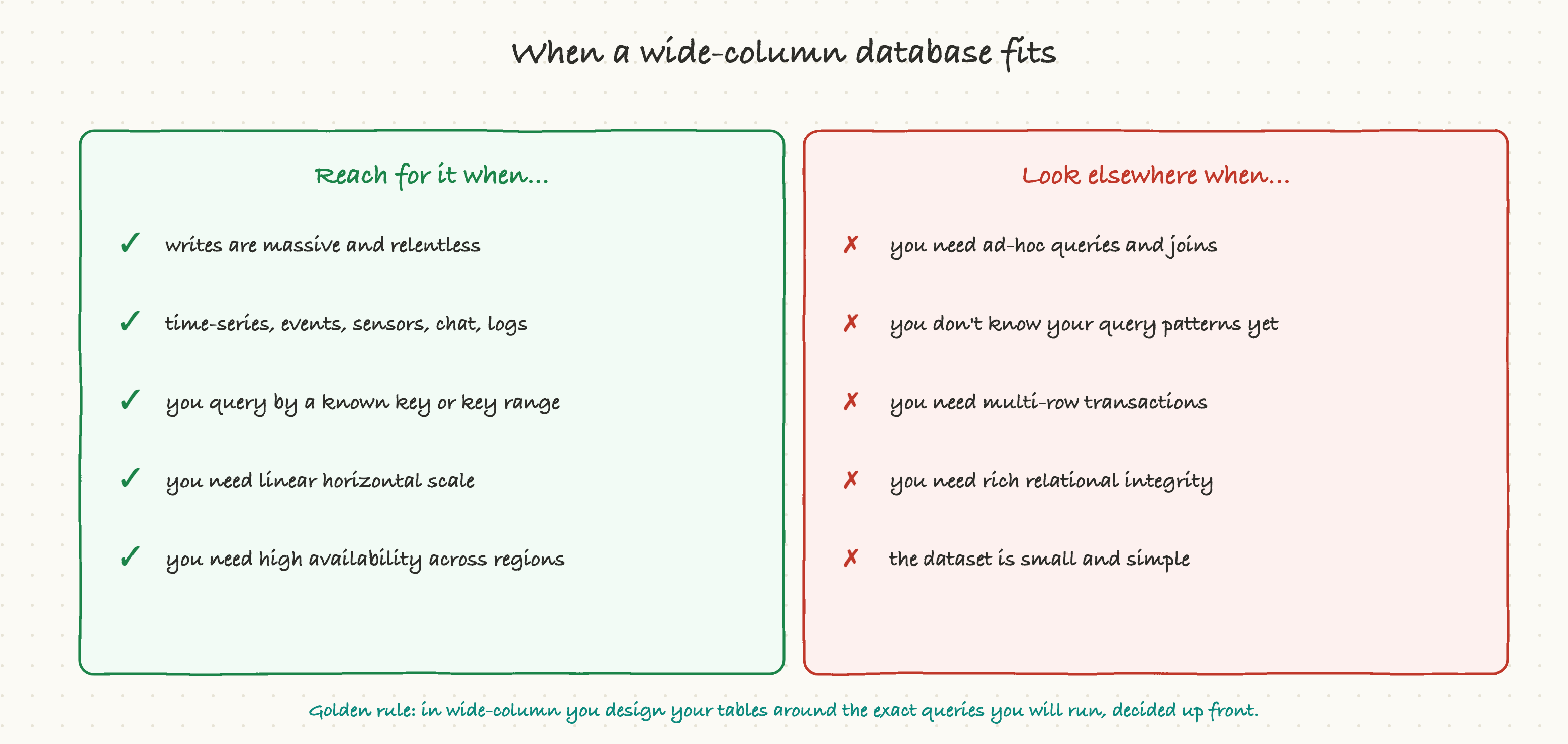
Reach for a wide-column database when writes are massive and relentless, when you're storing time-series, events, sensor readings, chat messages, or logs, when you query by a known key or key-range, and when you need to scale linearly across many machines and data centers while staying highly available. These are the workloads it was born for, and it handles them at a scale that feels almost magical.
Look elsewhere when you need ad-hoc queries and joins, when you don't yet know your query patterns, when you need multi-row transactions or rich relational integrity, or when your dataset is honestly just small. Using a wide-column database for a modest, query-flexible application is like renting a freight train to carry a backpack: enormous capability, completely wrong fit, and far more operational complexity than you need.
Why a TPM should care
You won't be choosing partition keys, but wide-column databases come with a distinctive set of trade-offs that shape timelines, costs, and what's easy versus hard, so a few things are worth holding onto:
- The data model is decided up front, and it's expensive to change. Because tables are designed around specific queries, "can we also query it this way?" is not a small request. It may mean building and backfilling an entirely new table. When a new access pattern comes up mid-project, treat it as real work, not a quick filter change.
- The partition key is the whole ballgame. Most performance disasters in these systems trace back to a bad partition key, usually one that funnels too much traffic to a single node (a "hot partition"). If a team is adopting one of these databases, the partition-key design is the thing worth a careful review early, while it's still cheap to change.
- "AP or CP?" tells you the failure behavior. Knowing whether a system favors availability (like Cassandra) or consistency (like HBase) tells you how it behaves during an outage, and lets you set the right expectations with stakeholders before the incident, not during it.
- Right tool, right job. A wide-column database is a specialist for write-heavy, known-query workloads. When a team proposes one, the healthy question is "is our data genuinely a firehose with predictable queries?" If yes, great. If the real need is flexible querying of modest data, a relational database will be far less work to live with.
Wide-column databases are not general-purpose, and that's the point. They trade flexibility for raw write power and effortless scale, and for the specific shape of problem they target, the endless, relentless, write-everything-forever workloads, they are unmatched. The next deep-dive looks at the simplest data model of all, the key-value store, and the closely related world of caching.