Highlights
PMI Silicon Valley: How TPMs Drive Complex Cross-Functional Programs
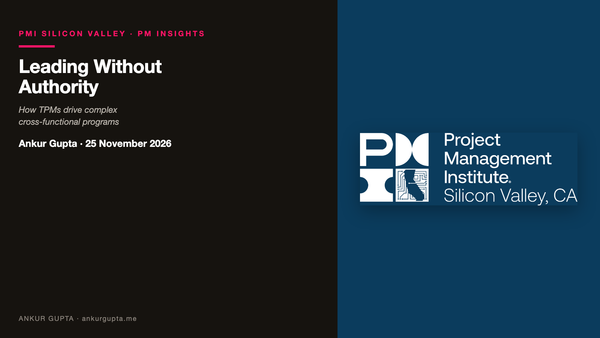
I'll be joining PMI Silicon Valley on November 25 to talk about leading without authority and how TPMs drive complex cross-functional programs.
Highlights
I'll be joining PMI Silicon Valley on November 25 to talk about leading without authority and how TPMs drive complex cross-functional programs.
Highlights
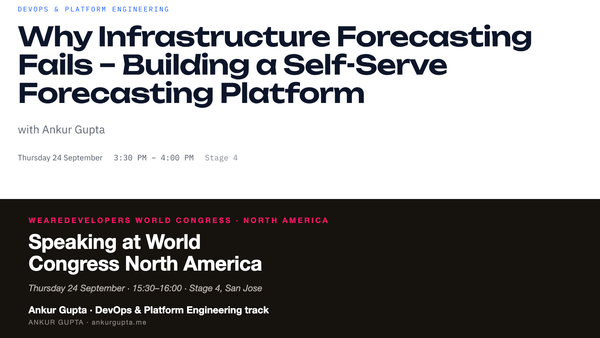
I'll be speaking at WeAreDevelopers World Congress North America on September 24 about why infrastructure forecasting fails and how to build a self-serve forecasting platform.
Highlights
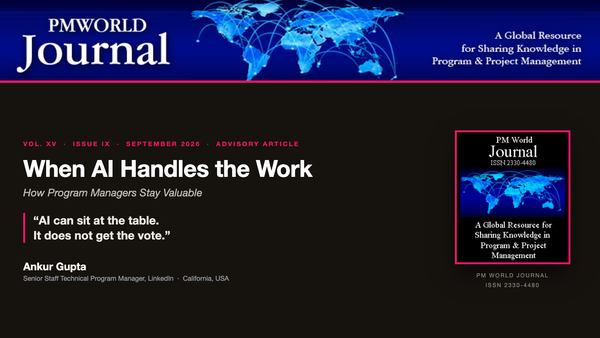
PM World Journal published my advisory article on what stays valuable in program management once AI makes coordination cheap – Vol. XV, Issue IX, September 2026.
Highlights
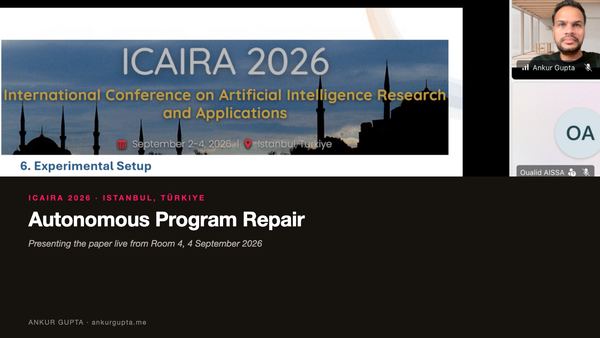
I presented a solo-authored paper on autonomous program repair at ICAIRA 2026 in Istanbul, Turkiye, 2-4 September 2026.
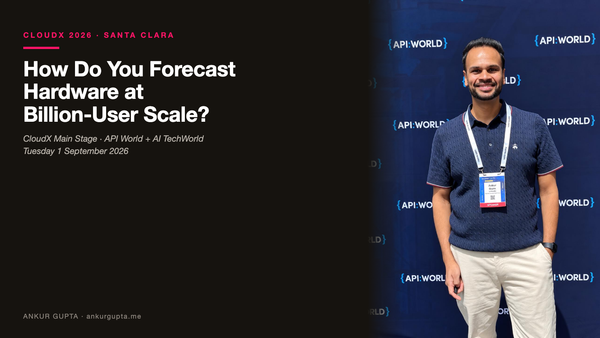
Highlights
I spoke on the CloudX Main Stage in Santa Clara on 1 September, co-located with API World and AI TechWorld, on why infrastructure forecasting fails at scale and the playbook that replaces guesswork with business intent.

Highlights
I'm serving as an industry advisor to a Cornell Tech Product Studio team this year, and as a judge in the CRITS review sessions.
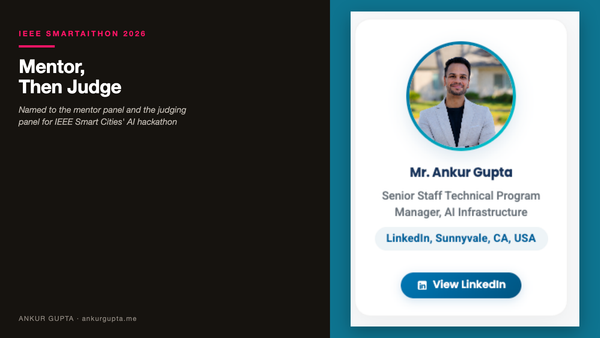
Highlights
I served IEEE SmartAIthon 2026 twice over: first as a mentor to the participating teams in August, then as a judge in the final evaluation round.
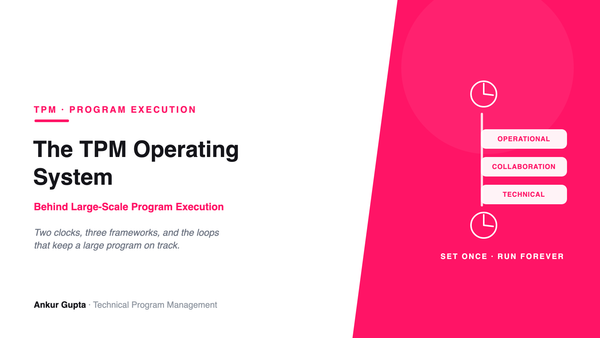
How a technical program manager actually runs a large program, from the first funding conversation to the hundredth status update.
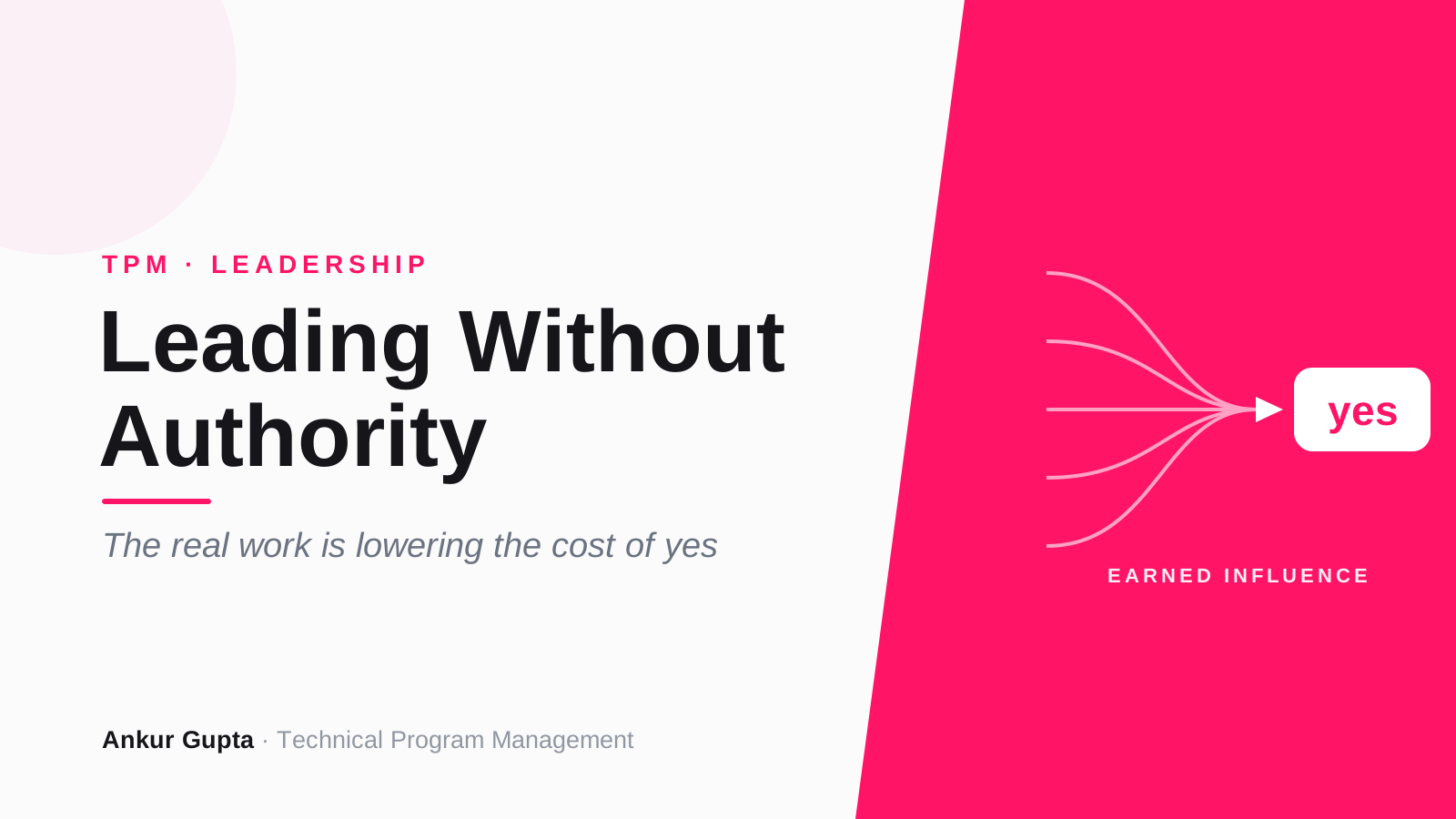
Every technical program manager eventually runs into the same uncomfortable fact: you are accountable for outcomes you cannot command. The engineers do not report to you. The architects do not need your sign-off. The executive who set the deadline will not write a line of the code that meets
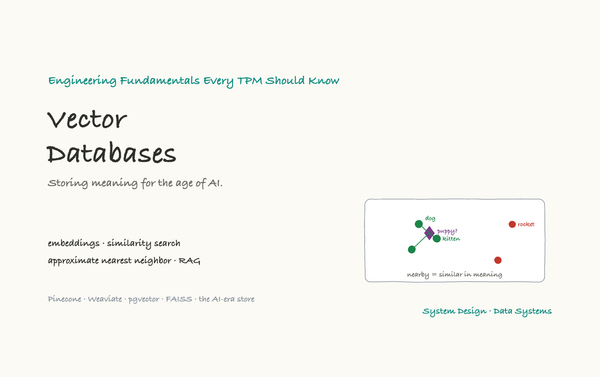
Every database we've met so far stores facts: a user's name, an order's total, a sensor's reading, a word in a document. The newest member of the family stores something stranger and more powerful: meaning itself. Vector databases are the data system

For years, the question “TPM vs PM vs EM” quietly stressed me out. Not in a theoretical way, but in a very real “I have no idea what I actually want to be” way. Not because I was overthinking titles, but because my early career created a lot of mixed
AI infrastructure, system design, and engineering execution at production scale.
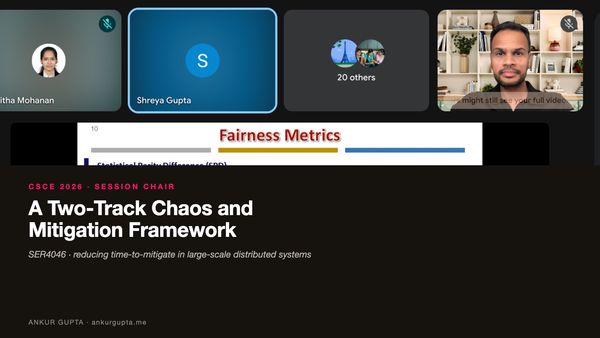
My solo-authored Springer paper at CSCE 2026 in Las Vegas proposes a two-track chaos and mitigation engineering framework for reducing time-to-mitigate in large-scale distributed systems.
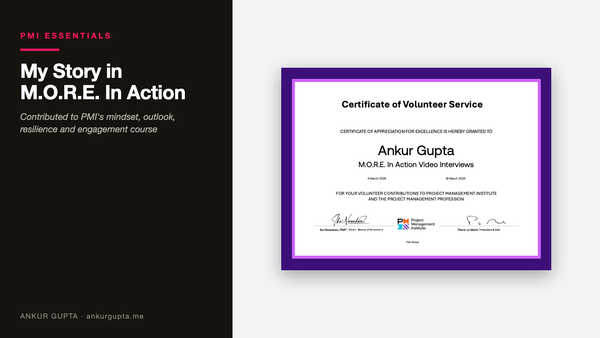
I was selected as a PMI volunteer for M.O.R.E. In Action, PMI's programme on mindset, outlook, resilience and engagement.
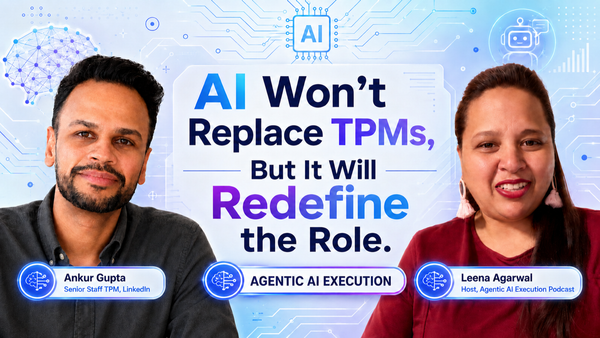
I joined Leena Agarwal on the Agentic AI Execution podcast to talk about what AI actually changes about the technical program management role.

Dataconomy published my walkthrough of how a single demand signal travels from a product decision to a hardware purchase order.
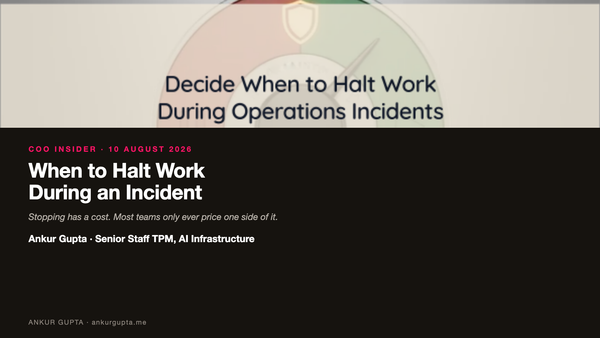
COO Insider published my take on how operations leaders should decide when to stop work during an incident, and when stopping costs more than continuing.
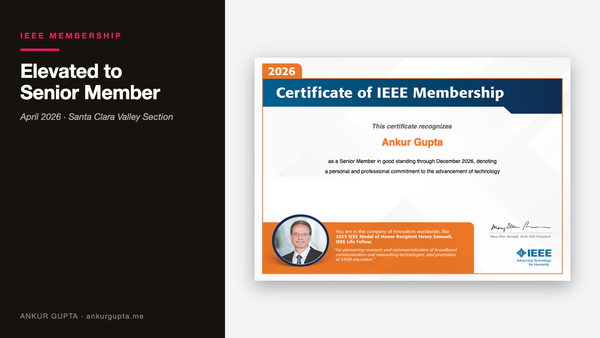
I was elevated to IEEE Senior Member in April 2026, a grade held by a small share of the institute's membership.
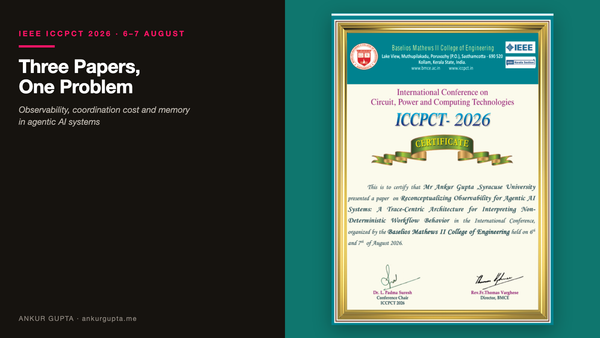
Three of my papers were accepted and presented at the 9th IEEE ICCPCT, 6-7 August 2026, covering agent memory architectures, observability for agentic AI, and coordination cost in multi-agent systems.
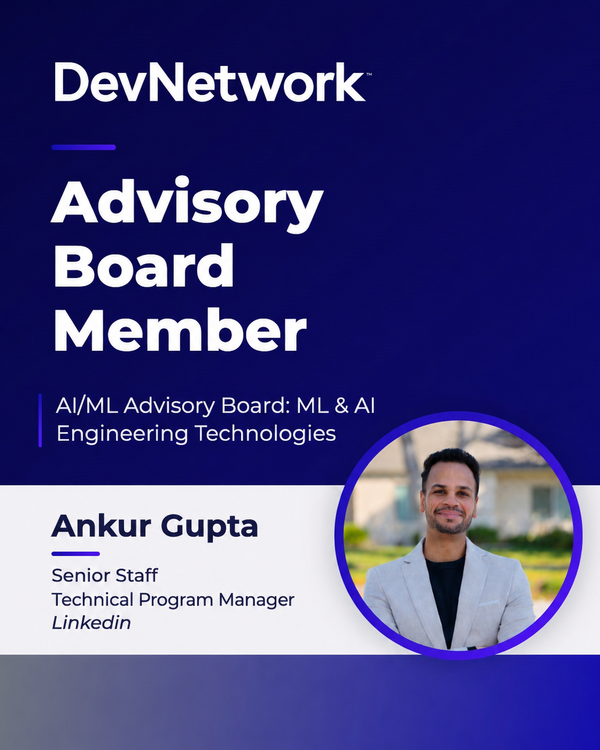
Selected to DevNetwork's 2026 AI/ML Advisory Board, helping shape content across its global developer and AI conferences.
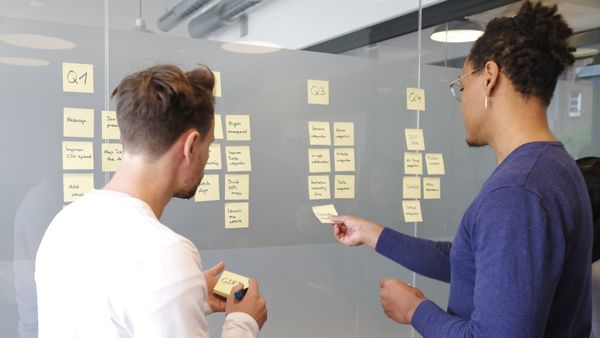
My take in Tech Magazine's expert roundup on balancing technical debt against new features.
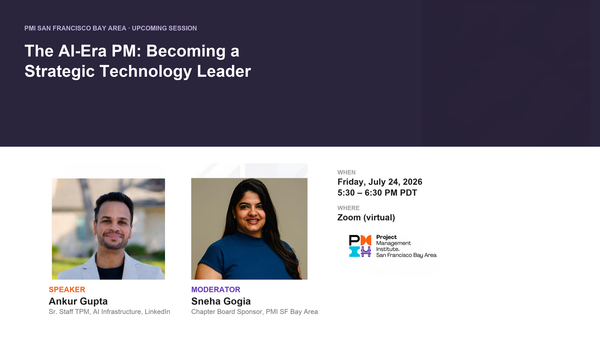
I spoke at a PMI San Francisco Bay Area session on how PMs can move beyond execution to become strategic technology leaders in the AI era.
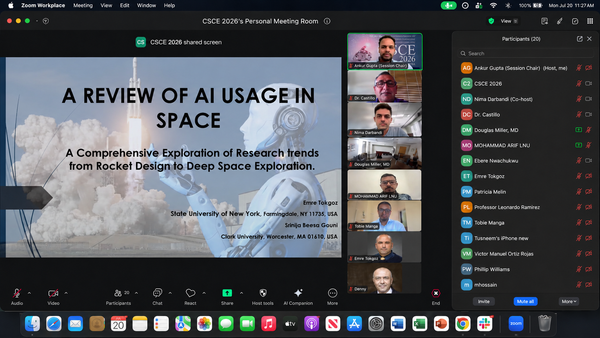
A morning of AI research, from rocket design to AI governance, and what stood out from the chair's seat.
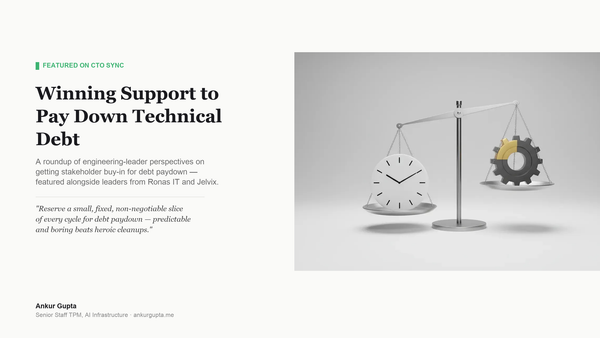
CTO Sync featured my approach to winning stakeholder support for technical debt paydown: weighing blast radius, exposing consequences to leadership, and reserving a fixed slice of every cycle for paydown.